The Multiple-Effect Evaporator is a thermal concentration system that connects several single-effect evaporators in series. The system reuses the secondary vapor generated from the previous effect as the heating source for the subsequent effect, thereby repeatedly utilizing the latent heat and significantly reducing fresh steam consumption. Generally, the more effects applied, the higher the steam economy. This mature technology is widely used for large-scale solution concentration and high-sali
Multiple-Effect Evaporator --- Proven and Reliable Thermal Evaporation System
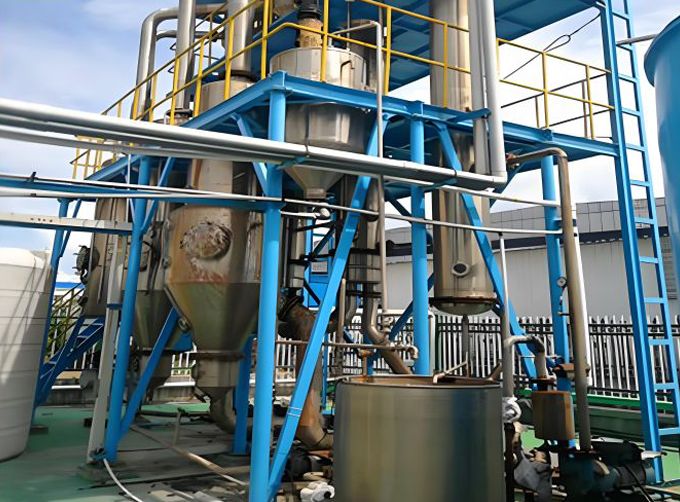
The Multiple-Effect Evaporator is a thermal concentration system that connects several single-effect evaporators in series. The system reuses the secondary vapor generated from the previous effect as the heating source for the subsequent effect, thereby repeatedly utilizing the latent heat and significantly reducing fresh steam consumption. Generally, the more effects applied, the higher the steam economy. This mature technology is widely used for large-scale solution concentration and high-salinity wastewater treatment in chemical, food, pharmaceutical, and environmental protection industries.
Feed liquid enters a series of evaporator effects. Fresh steam heats the first effect, causing the material to boil and produce secondary vapor. Instead of being condensed, this vapor feeds into the heating chamber of the second effect as the heating medium. This process repeats along the train. To maintain an effective thermal driving force between effects, a vacuum system is connected to the last effect, ensuring that both operating pressure and boiling point decrease successively through the train. The secondary vapor from the last effect is finally condensed in a condenser. In this way, the heat from fresh steam is utilized multiple times, with a typical three-effect system consuming only about 0.3–0.4 tons of steam per ton of evaporated water.
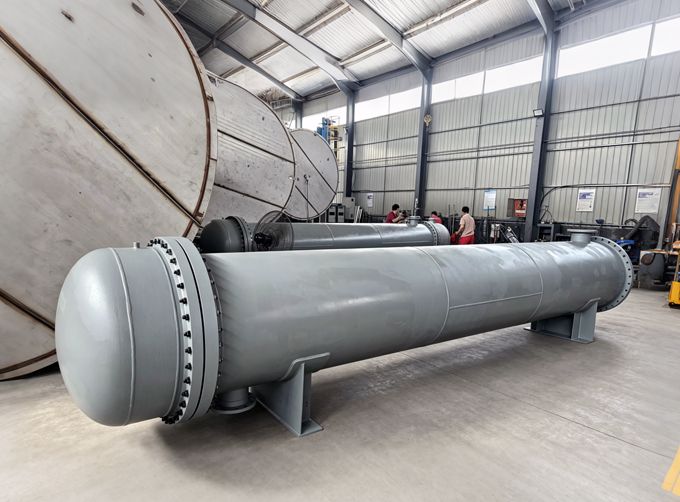
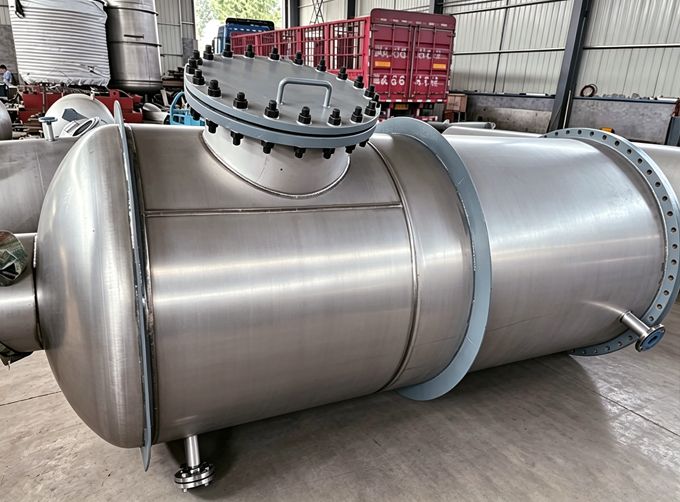
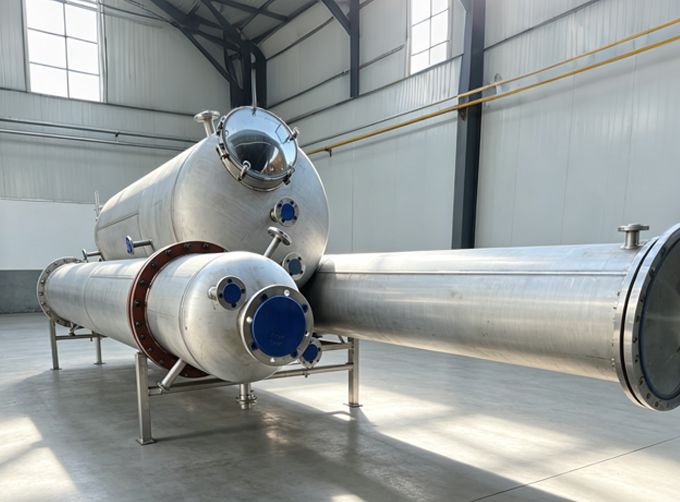
Evaporator Bodies: Consist of multiple evaporator effects, each equipped with a heating chamber (typically shell-and-tube) and a separation chamber for vapor-liquid separation.
Preheater System: Uses recovered heat from condensate and last-effect vapor to progressively preheat the feed, maximizing energy recovery.
Vacuum System: Maintains a decreasing pressure gradient from the first to the last effect, lowering boiling points and enabling multi-effect operation.
Feed & Circulation Pumps: Ensure material transfer between effects and forced circulation to prevent scaling and enhance heat transfer efficiency.
Condenser: Condenses the final-effect secondary vapor to maintain system vacuum and recover clean condensate.
High Steam Economy: Through cascade heat utilization, a three-effect system typically achieves a steam-to-water ratio of 0.3–0.4. Higher effect numbers yield even lower steam consumption.
Mature & Robust Technology: Classic process with extensive industrial experience, straightforward control philosophy, and low failure rates, ideal for large-scale continuous operations.
Highly Adaptable Process: Can be configured in forward, backward, or mixed feed patterns to suit different material characteristics and final concentration requirements.
Moderate Initial Investment: Compared to MVR, there is no large high-speed compressor required; the structure is relatively simple, and the demand on plant electrical infrastructure is lower.
Wide Applicability: Particularly suitable for facilities with access to low-cost steam or where electricity prices are relatively high.
-----------------------------------------------------------------------
Parameter Specification Range / Description
----------------------------- -----------------------------------------
Total Processing Capacity 1–100 t/h (scalable)
Number of Effects 2–6 effects (commonly 3–4)
Steam Consumption ~0.3–0.4 t / t water (3-effect);0.2–0.3 t / t water (4 or more effects)
Evaporation Temperature Ranges from ~45°C (last effect) to~100°C (first effect), depending on vacuum and steam pressure
Material of Construction SS304, SS316L, 2205 Duplex StainlessSteel, Titanium, etc.
Control Mode PLC/DCS with auto regulation of feed,temperature, and level
Heat Exchanger Type Shell-and-tube, pressure rating varies per effect
-----------------------------------------------------------------------
-----------------------------------------------------------------------
Industry Typical Applications
---------------------- ------------------------------------------------
Chemical High-salinity wastewater concentration and crystallization, chlor-alkali brine evaporation, organic solvent recovery
Pharmaceutical API intermediate concentration, vitamin evaporation, fermented waste reduction
Food & Beverage Fructose/glucose syrup concentration, MSG and yeast suspension concentration, whey evaporation
Environmental Near-ZLD industrial brine treatment, power plant
Protection FGD wastewater reduction, coal chemical wastewater concentration
Light Industry & New Pulp black liquor concentration, rare earth
Materials leach solution evaporation and crystallization




 1464791908@qq.com

 +86 13832176953