Natural Circulation Evaporator — Simple, Reliable Thermal Evaporation System Product Overview The Natural Circulation Evaporator is a thermal evaporation system in which liquid circulation is driven by the thermosiphon effect caused by density differences within the heating tubes. Without an external circulation pump, the feed liquid establishes a self-organized circulation loop between the heating chamber and the evaporation chamber, enabling continuous evaporation and concentration. It is pa
Natural Circulation Evaporator — Simple, Reliable Thermal Evaporation System
The Natural Circulation Evaporator is a thermal evaporation system in which liquid circulation is driven by the thermosiphon effect caused by density differences within the heating tubes. Without an external circulation pump, the feed liquid establishes a self-organized circulation loop between the heating chamber and the evaporation chamber, enabling continuous evaporation and concentration. It is particularly suitable for solutions with low fouling tendency and moderate concentrations, and is widely used for solution concentration and pretreatment in chemical, light industry, food, and environmental protection sectors. This equipment represents a cost-effective and simple basic evaporation solution.
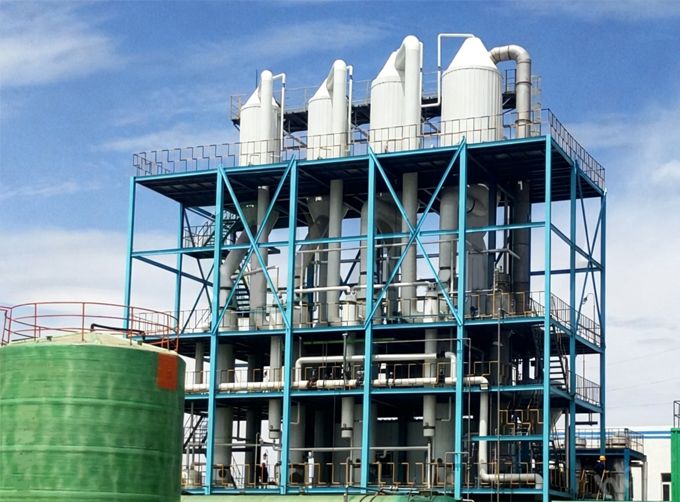
After entering the evaporator, the feed liquid is heated inside the tubes by an external heating medium (typically live steam or waste vapor). As the liquid near the tube wall increases in temperature and decreases in density, it rises into the evaporation (vapor-liquid separation) chamber. There, under reduced pressure, the superheated liquid flashes and vaporizes, and vapor-liquid separation is completed. Denser, cooler liquid returns from the bottom of the separation chamber through the downcomer to the heating chamber inlet, forming a continuous natural circulation loop. The generated secondary vapor can be sent to the next effect for multi-stage thermal utilization, and the clean condensate is collected centrally for reuse, achieving cascade utilization of thermal energy.
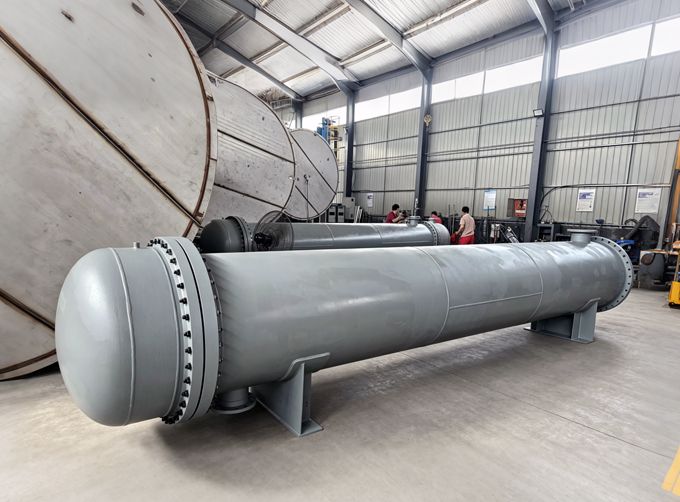
Heating Chamber: Typically a tubular or coil-type heat exchanger providing the primary heat transfer area. The heating medium flows on the shell side, and the feed liquid flows inside the tubes; the temperature difference drives natural circulation.
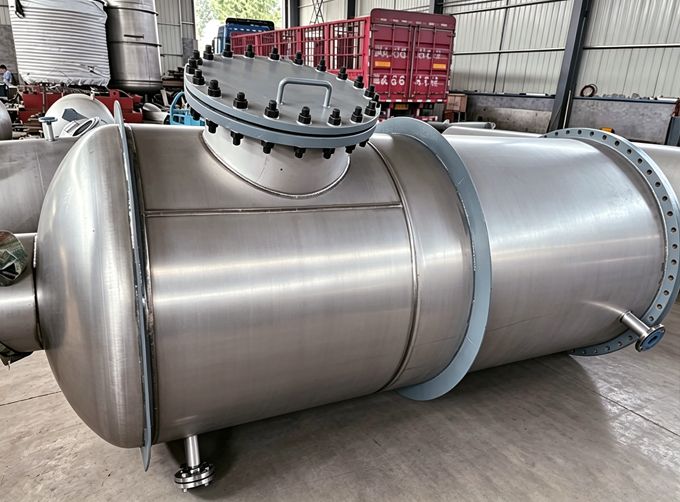
Evaporation/Separation Chamber: Provides space for vapor-liquid separation. The secondary vapor is separated from the concentrated liquid by gravity settling and demisters, ensuring acceptable vapor quality and target liquid concentration.
Downcomer (Circulation Pipe): Connects the bottom of the separation chamber to the heating chamber inlet, providing a return path for the cooler liquid. Its large diameter and low resistance are critical for maintaining sufficient driving force for circulation.Condenser: Condenses the last-effect secondary vapor, maintaining vacuum or atmospheric conditions at the system outlet, while recovering clean condensate.
Vacuum System (Optional): Maintains negative pressure operation, lowering the boiling point, protecting heat-sensitive materials, and increasing the effective temperature difference.
Pump-Free Circulation: Natural circulation powered by density differences requires no circulation pump, resulting in zero additional mechanical energy consumption, quieter operation, and reduced maintenance.
Simple and Reliable Structure: Fewer moving equipment means easier operation, lower failure rates, and suitability for continuous, long-term stable operation.
Significant Investment Advantage: Compared with forced-circulation evaporators, the simplified equipment configuration brings a lower initial investment, making it ideal for budget-sensitive projects.
Moderate Operational Flexibility: Maintains stable operation within a certain load range, suitable for applications with moderate evaporation capacities and gradual concentration changes.
Cascade Thermal Utilization: Can be operated as a single effect or arranged in multiple effects in series (typically 2–4 effects), or combined with a heat pump, to further improve steam economy.
Parameter Specification Range / Description |
Single-Effect Capacity 0.5–30 t/h (customizable for multiple effects)
Steam Consumption Approx. 1.0–1.1 t per ton of evaporated water (single effect, significantly reduced with multiple effects)
Evaporation Temperature 50–100 ℃ (atmospheric or vacuum adjustable)
Overall Heat Transfer Approx. 800–1800 W/(m²·℃) (depending on feed Coefficient and operating conditions)
Material of Construction Carbon Steel, SS304/316L, 2205 Duplex Stainless Steel, Titanium, etc.
Control Mode PLC/DCS automatic control / conventional instrumentation, remote monitoring supported
Heat Exchanger Type Tubular / coil-type, designed for atmospheric or vacuum pressure
Chemical Inorganic salt solution concentration, dilute lye evaporation, process wastewater pretreatment
Light Industry Sugar liquor concentration, glycerin evaporation, surfactant solution concentration
Food Salt solution concentration (e.g., soy sauce desalination pretreatment), starch syrup evaporation
Environmental Low-concentration saline wastewater volume reduction, Protection reactor wash-water reduction and reuse
Metallurgy Dilute acid pickling liquor concentration, hydrometallurgical leach solution pre-concentration —————————————————




 1464791908@qq.com

 +86 13832176953