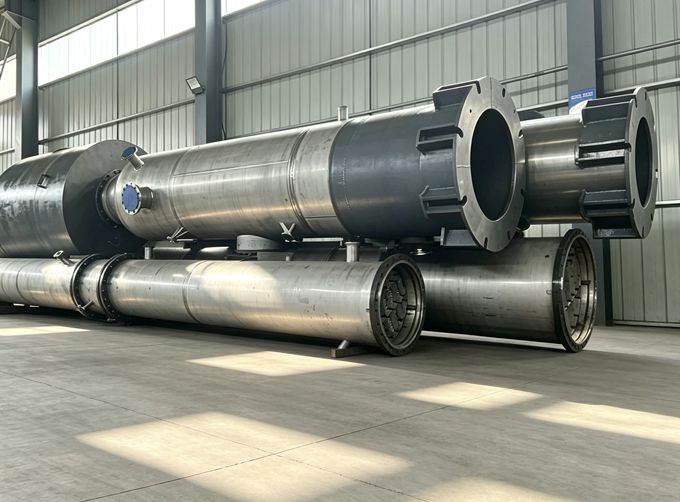
Distillation Column — High-Efficiency Gas-Liquid Mass Transfer Separation System Product Overview A Distillation Column is a mass transfer device that exploits differences in component volatilities to achieve high-purity separation through countercurrent gas-liquid contact. Ascending vapor and descending liquid repeatedly undergo partial condensation and vaporization on trays or packing surfaces, causing light components to concentrate at the top and heavy components at the bottom. It serves a
A Distillation Column is a mass transfer device that exploits differences in component volatilities to achieve high-purity separation through countercurrent gas-liquid contact. Ascending vapor and descending liquid repeatedly undergo partial condensation and vaporization on trays or packing surfaces, causing light components to concentrate at the top and heavy components at the bottom. It serves as a core system for product purification and solvent recovery across petrochemical, fine chemical, pharmaceutical, coal chemical, and solvent recycling industries.
Preheated feed enters the column at an intermediate stage. A bottom reboiler generates ascending vapor, while an overhead condenser partially condenses the top vapor, returning a portion as reflux. On trays or packing, the countercurrent vapor and liquid phases undergo intensive mass transfer—more volatile components progressively enrich in the vapor phase and less volatile components in the liquid phase. A high-purity light product is drawn from the top, and a heavy product from the bottom. Separation precision is maintained by adjusting reflux ratio, column pressure, and temperature profiles, establishing stable temperature and concentration gradients along the column.
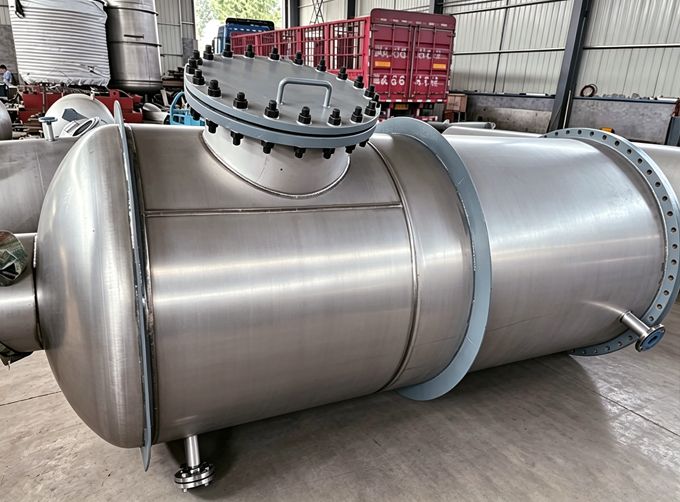
Column Shell: A vertical cylindrical pressure vessel housing trays or packing, providing the contact space for gas-liquid mass transfer. Design pressure spans from full vacuum to high pressure (up to several MPa), with materials selected according to service conditions.
Trays / Packing: Either tray types (sieve, valve, bubble cap) or structured/random packing, these internals determine mass transfer efficiency and separation capacity—the heart of the distillation column.
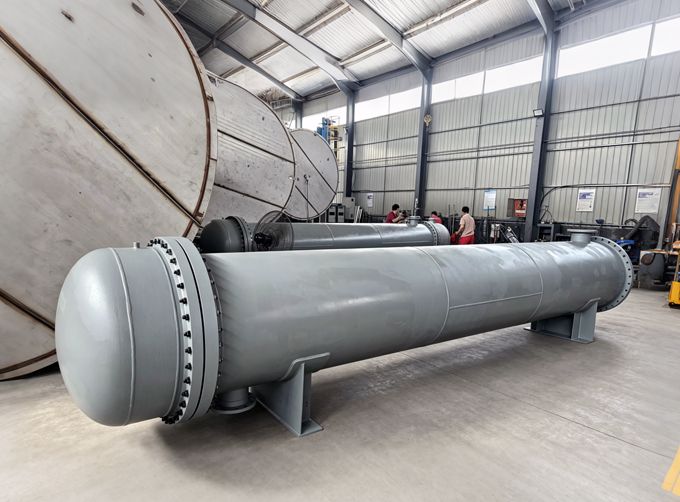
Reboiler: Supplies the heat required to generate stripping vapor, commonly a shell-and-tube or thermosiphon design, using steam or hot oil as heating medium.
Condenser: Located at the top, it condenses overhead vapor to provide reflux and distillate product, typically employing shell-and-tube or plate heat exchanger designs.
Reflux System: Comprising a reflux drum and reflux pump, it precisely controls the reflux ratio, directly affecting product purity and separation performance.
Control System: A DCS/PLC-based system provides real-time monitoring of top/bottom temperature, pressure, level, and flow, enabling online adjustment and unattended operation.
High Separation Efficiency: Optimally designed internals achieve a very high number of theoretical stages, delivering product purity up to 99.9% or higher to meet demanding separation specifications.
Wide Operating Flexibility: Stable operation is maintained at 40%–120% of design load, accommodating fluctuations in feed composition and flow rate, suitable for multi-product, flexible production.
Energy-Saving Design: Multi-effect distillation, heat-pump distillation, and intermediate reboiler technologies slash energy consumption by 30%–60% compared to conventional single-column setups.
Safe and Reliable Construction: Designed in accordance with stringent pressure vessel codes such as GB or ASME, providing corrosion resistance and high-pressure capability for harsh service conditions.
Modular and Customized: Tray/packing type, column diameter, and height are customized based on the specific mixture and separation requirements; modular design facilitates on-site installation and future revamps.
Parameter Specification Range / Description |
Column Diameter 0.3–8.0 m (customizable)
Processing Capacity Hundreds of kg/h to hundreds of tons/h
Operating Pressure High vacuum (<1 kPa abs.) to high pressure (>10 MPa)
Operating Temperature -196 ℃ (cryogenic) to over 400 ℃
Product Purity Top/bottom up to 99.5%–99.99%
Theoretical Stages 5–100 (depending on mixture and design)
Material of Construction Carbon steel, SS304/316L, Duplex SS, Hastelloy, Titanium, etc.
Internal Type Valve trays, sieve trays, bubble cap trays, structured packing, random packing
Control Mode DCS/PLC automatic control, remote monitoring and data acquisition
Petrochemical Atmospheric/vacuum crude oil separation, ethylene/propylene purification, aromatics extraction
Coal Chemical Methanol/ethanol refining, MEG purification, mixed aromatics separation
Fine Chemical Organic solvent dehydration & purification, high-purity reagent production, flavor & fragrance separation
Pharmaceutical Solvent recovery (e.g., acetone, ethanol), intermediate purification, API solvent separation
Environmental & Waste solvent recovery, lithium battery electrolyte New Energy solvent distillation, biodiesel purification
Food & Beverage Alcohol distillation, food-grade solvent recovery, flavor concentration




 1464791908@qq.com

 +86 13832176953